


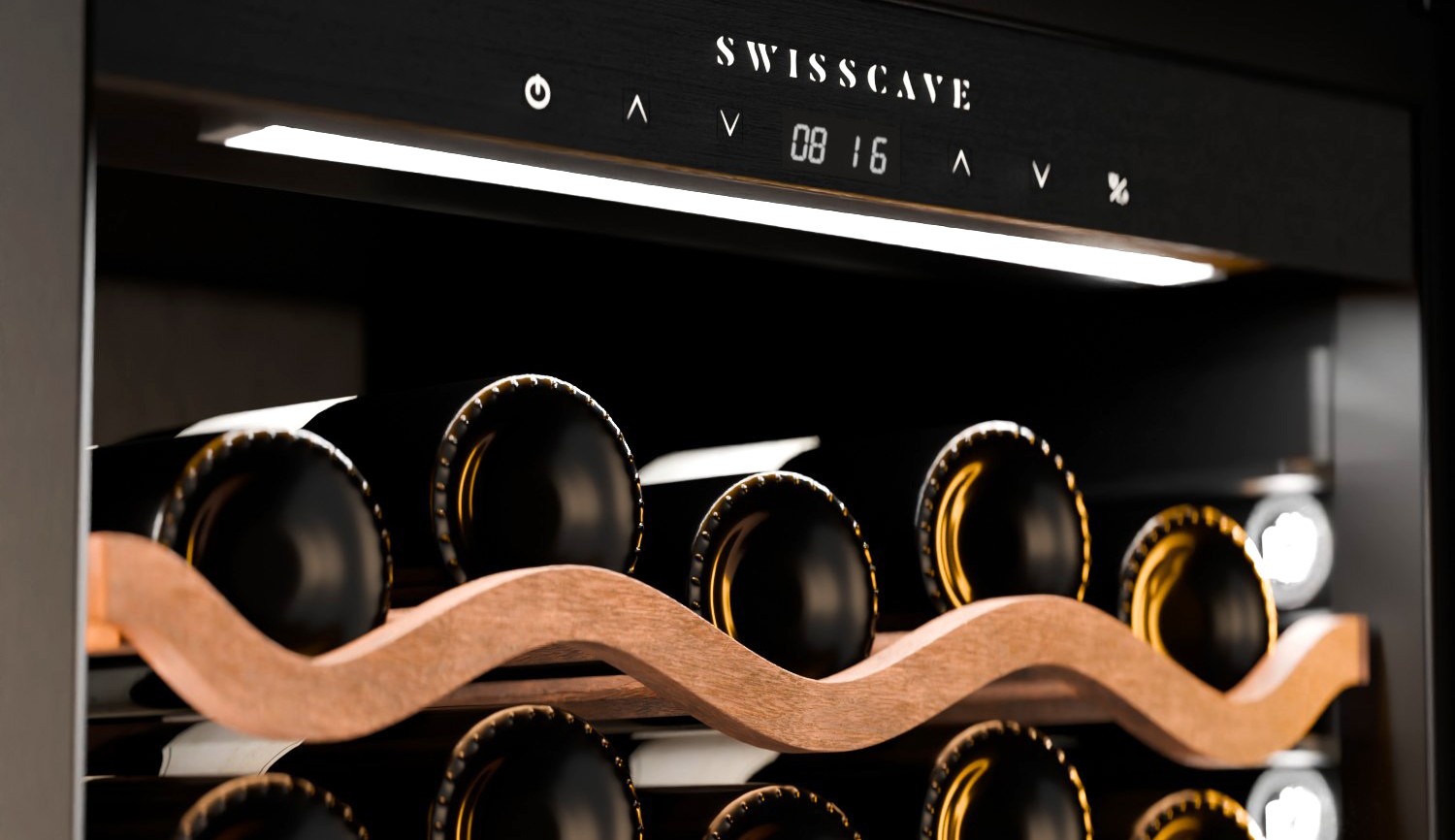
The Creation of the Curved Shelf
Why true innovation begins where imitation ends
SWISSCAVE has never defined itself through products alone. It has always been defined by a way of thinking. A mindset shaped by precision, restraint and the belief that progress does not come from repetition — but from re-imagination.
As brands grow, they attract attention. And attention brings imitation. Some see that as validation. At SWISSCAVE, we see it as responsibility.
Because being looked at means being measured. Not only by customers, but by an entire industry. And when others begin to follow, the only honest response is not to protect what exists — but to move forward.
Where the idea really began
The Curved Shelf did not begin with a product brief or a marketing objective. It began in a development meeting.
Around a table. Sketches scattered. Bottles moved by hand. CAD files opened, closed, discarded. The question on the table was simple — and uncomfortable:
If the exterior of a SWISSCAVE cabinet represents architectural clarity, why should the interior still follow conventions?
Diego Niederer, part of SWISSCAVE’s core development team, challenged what most would have accepted as given. Straight shelves had always existed. They worked. They were efficient. But they were never questioned.
So the team began questioning them.
The moment convention broke
As the discussions evolved, it became clear that the shelf itself was not just a component. It was the visual and functional backbone of the cabinet’s interior.
If wine storage was to be rethought, it had to start there.
Together with Diego Niederer, the development team explored new geometries. Not to be different — but to be better. Forms were tested, rejected, refined. What emerged was not a design statement, but a consequence of logic: a curved structure that followed the natural rhythm of bottles, space and perspective.
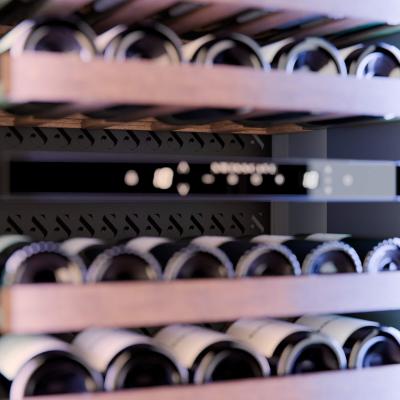
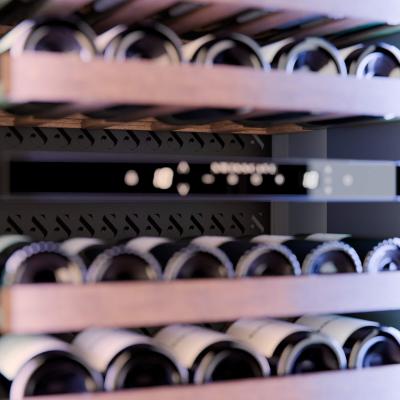
The result felt immediately different. The cabinet gained depth. The bottles appeared calmer. The interior felt intentional — almost architectural.
From idea to form

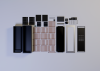
Early development phase: CAD sketches, physical tests and design discussions with the SWISSCAVE development team — Diego Niederer, Sara Blüm, Edip Osmani and Hanspeter Jäger.
What followed was not the easiest path. A curved shelf meant new tooling, new production logic and no existing reference point. There was no template to follow.
It would have been easier to stop. To refine what already existed. To stay within known boundaries.
That option was never seriously considered.
Because innovation at SWISSCAVE does not aim for variation. It aims for distinction.
More than a shelf
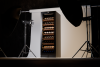
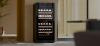
The Curved Shelf is not an accessory. It is not an add-on. It redefines how wine is stored, how it is presented and how the interior of a wine cabinet is perceived.
Its geometry improves visual balance. Its structure enhances storage efficiency. Its presence transforms the cabinet from a technical appliance into a composed interior space.
It creates something that did not exist before — not in this form, not in this category.
Designed to remain original
True originality deserves protection.
The Curved Shelf was developed in Switzerland and secured through international patents in both the European Union and China. Not as a symbol of ownership — but as a commitment.
A commitment to authenticity. To ensure that what was created with intent remains recognisable as such.
A reflection of how SWISSCAVE works
This is what defines SWISSCAVE.
When others look for direction, we take responsibility. When imitation becomes easy, we choose to rethink. When something works, we ask whether it can work better — or differently.
The Curved Shelf is the result of that mindset.
Designed in Switzerland.
Worldwide patented.
Coming soon.





Comments