


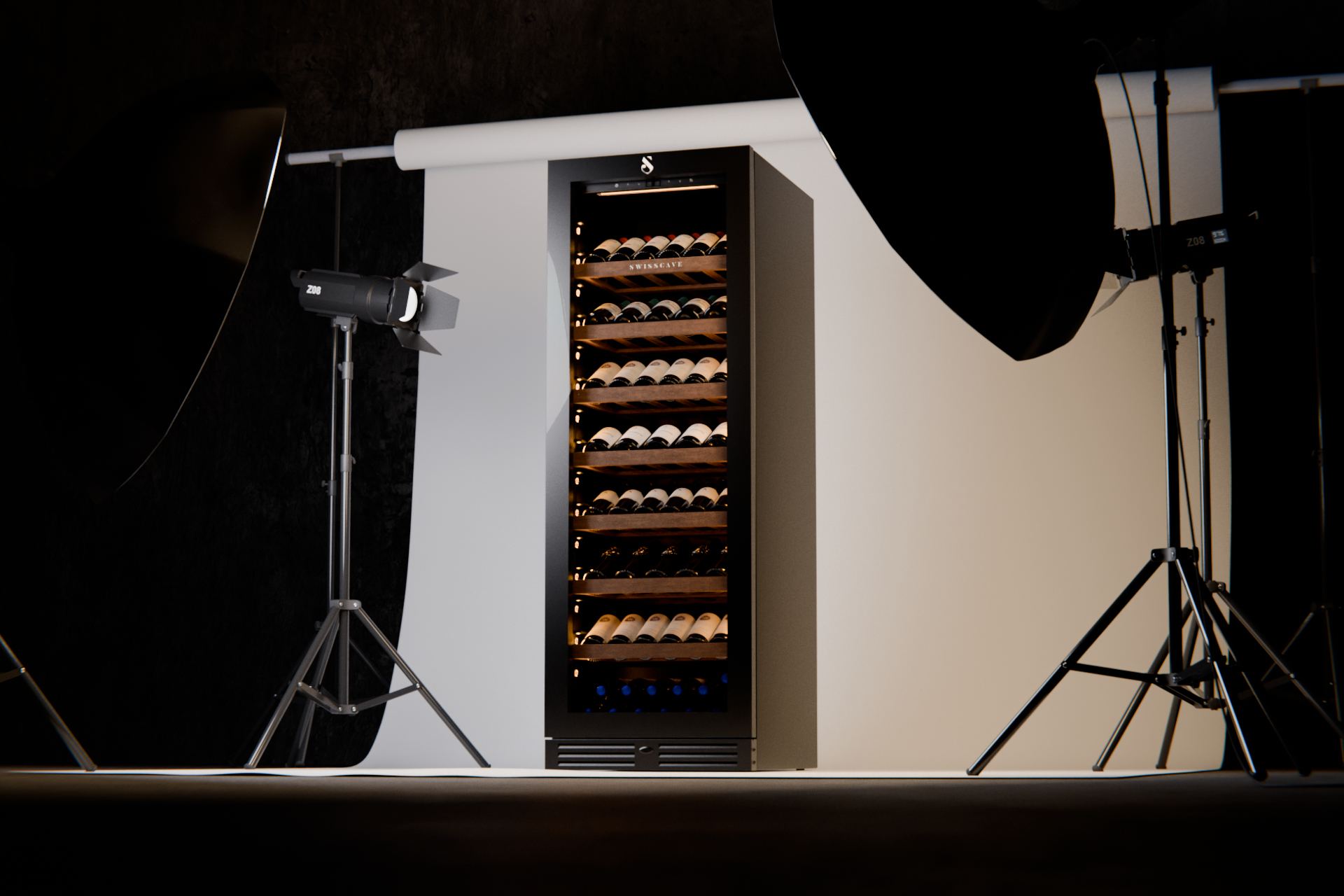
From the First Engineering Meeting to Your Home
Why the Development of a New SWISSCAVE Wine Cooler Can Take Up to Two Years
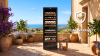
When you see a SWISSCAVE wine cooler in a kitchen, living space or wine cellar today, you see the finished product.
What most people never see is the journey behind it.
A new SWISSCAVE model is not developed in a few weeks, nor in a few months. Between the first concept and the official market launch, there are often up to two years of development, multiple prototype generations, extensive field testing and countless engineering reviews.
Because one thing has never changed at SWISSCAVE:
Quality is not a compromise.
It Starts With a Question
Every new SWISSCAVE model begins with a simple but important question:
How can we make it better?
New products are inspired by conversations with wine enthusiasts, retailers, kitchen studios, architects, interior designers, hospitality professionals and long-standing SWISSCAVE customers.
Often, it is seemingly small details that spark a new project. Greater capacity. Lower noise levels. Improved integration into modern kitchens. New lighting concepts. Better airflow. Enhanced temperature stability. More refined materials.
Only when we are convinced that a new model can offer genuine added value does the development process begin.
The First Engineering Meeting
The development of a new SWISSCAVE product typically involves more than a dozen engineers, product specialists and quality experts.
During the very first engineering meeting, the foundation of the project is established:
- Target customer and use case
- Capacity and interior layout
- Temperature zones and airflow design
- Compressor and cooling technology
- Evaporators and ventilation systems
- Door systems and hinges
- Glass construction and insulation
- Wooden shelves and interior materials
- Lighting and user experience
- Noise reduction
- Energy efficiency
- Packaging and transportation concepts
We do not simply select components from a catalogue.
We define them.
Many components are specifically selected, modified or further developed to meet SWISSCAVE standards. What matters is not only whether a component works today, but whether it continues to perform reliably for many years to come.
The First Prototype
Once the engineering phase is complete, the first prototype is built.
This is always a special moment.
Months of planning, technical discussions and design decisions finally become a physical product.
The door is opened. The lighting is switched on. Temperatures are measured. Noise levels are assessed. Shelves are tested. Build quality is inspected.
And often, the result is not immediate approval.
Instead, it is a list.
A long list.
Door gaps. Wood finishes. Air circulation. LED brightness. User interface adjustments. Acoustic performance. Packaging improvements. Transportation stability.
Details that many customers may never consciously notice, but details that ultimately define the difference between an ordinary product and a SWISSCAVE product.
Multiple Samples. Multiple Development Cycles.
Very rarely does the first prototype meet all expectations.
That is why a new model typically passes through several development stages:
- Sample 1 – Initial technical and design evaluation
- Sample 2 – Improvements based on the first review
- Sample 3 – Final validation before field testing and pilot production
Between each phase, improvements are identified, implemented and tested again.
Temperature stability, airflow performance, vibration control, usability, material quality and acoustic performance are not evaluated separately.
They are evaluated as a complete ownership experience.
A SWISSCAVE wine cooler is not designed simply to cool wine.
It is designed to protect wine, complement premium interiors and perform reliably for many years.
Quality Is Not Created in a Laboratory Alone
Laboratory testing is important.
Real life is even more important.
That is why we do not rely exclusively on internal testing.
Before a new model enters production, it undergoes several months of real-world evaluation.
Pre-production units are placed with carefully selected SWISSCAVE partners in different countries, including:
- Long-standing wine specialists
- Premium retailers
- Kitchen studios
- Architects
- Interior designers
- Hospitality professionals
But our partners are not the only people involved in the process.
Selected long-term SWISSCAVE customers also receive early access to new models, often months before the official market launch.
These are wine enthusiasts who have used SWISSCAVE products for years and whose experience is invaluable.
They are not chosen because they are influencers.
They are chosen because they are honest.
And honest feedback is exactly what we want.
These customers test the products where they will actually be used:
- In private wine cellars
- In living spaces
- In kitchens
- In restaurants
- In daily operation
Noise levels, usability, temperature stability, shelf functionality, lighting, packaging and transportation performance are all evaluated under real-world conditions.
Their feedback goes directly back to our engineering and product teams.
Four to Six Models in Development at the Same Time
At SWISSCAVE, we are never working on just one future product.
At any given time, we typically have four to six models progressing through various stages of development.
Some are still concepts. Others are in prototype testing. Some are already undergoing field trials. Others are approaching pilot production and final approval.
This continuous development process ensures that the SWISSCAVE portfolio grows deliberately and strategically.
Not every project reaches the market.
Not every idea is approved.
And not every prototype earns the right to enter production.
Sometimes we invest months into a concept before deciding that it simply does not meet the standards required to carry the SWISSCAVE name.
Why?
Because we would rather stop a project than launch a product that falls short of our own expectations.
Pilot Production
Only after successful technical testing and field validation does a model enter pilot production.
A small initial production run is manufactured.
This phase confirms whether the high standards achieved during development can be consistently reproduced under real production conditions.
Build quality, component consistency, packaging, transportation durability and final inspection processes are evaluated once again.
Only after successfully passing this stage is a model considered for inclusion in the SWISSCAVE portfolio.
Why We Invest So Much Effort
A wine cooler is not a short-term product.
It often accompanies its owner for many years, sometimes even decades.
It protects valuable wine collections and occupies a visible place in kitchens, living spaces, wine cellars, restaurants and hotels.
Our customers trust us to provide stable and reliable storage conditions for their wines.
Trust must be earned.
That is why we invest significant time, resources and passion into every model we develop.
A product is only launched when it meets our standards for quality, functionality, longevity, design and user experience.
Only the Best Earn the SWISSCAVE Name
When you look at a SWISSCAVE wine cooler today, you see a finished product.
We see something else.
We see hundreds of decisions.
Years of development.
Countless tests.
Feedback from partners and customers across multiple countries.
Discussions about details that many people will never notice, but that make all the difference.
Because in the end, every product carries only one name:
SWISSCAVE.
And that name comes with responsibility.
A product only becomes part of our portfolio when it has earned the right to carry that name.
Not every product makes it.
Only the best do.
SWISSCAVE – Passionate for Perfection.






Comments