


Time Is Not a Promise. It Is a Filter.
What is built quickly often disappears just as quickly.
What remains is the result of repeated decisions — made consistently, over years.
For nearly 15 years, we have operated in a market that is now louder than ever. New players enter fast, cycles become shorter, trends accelerate. There is more movement, more messaging, more pressure to differentiate.
And yet the fundamentals do not change.
Real quality does not come from speed.
It comes from time.
Time reveals what lasts
Time does not reward noise. It tests substance.
What appears convincing in a launch phase often weakens under repetition. What seems impressive in a moment may lose relevance once the market moves on. But what is thoughtfully built, carefully refined and consistently aligned tends to remain.
This is true in product development, in positioning and in brand building.
Time is not simply duration. It is a filter that separates short-lived activity from lasting value.
Experience shapes position
With time, the focus shifts.
From reaction to positioning.
From what is possible to what is chosen.
From movement to direction.
Experience is not about having seen everything. It is about knowing what matters — and what does not.
Not every idea deserves to be launched.
Not every market move deserves a response.
Not every visible opportunity deserves attention.
Strength is built where direction is maintained — especially under pressure.
Consistency is not standing still.
It is improvement without losing alignment.
Strategy is precision
In crowded markets, clarity becomes rare. And for that very reason, it becomes valuable.
Strategy is often misunderstood as expansion, speed or visibility. In reality, strategy is frequently the opposite: reduction, discipline and precision.
It means reducing complexity without losing depth.
Creating form without becoming loud.
Managing visibility — not maximizing it.
What remains quiet is quiet by design.
What becomes visible is chosen with intent.
This is where strategic maturity begins: not in doing more, but in knowing what to leave out.
Position over speed
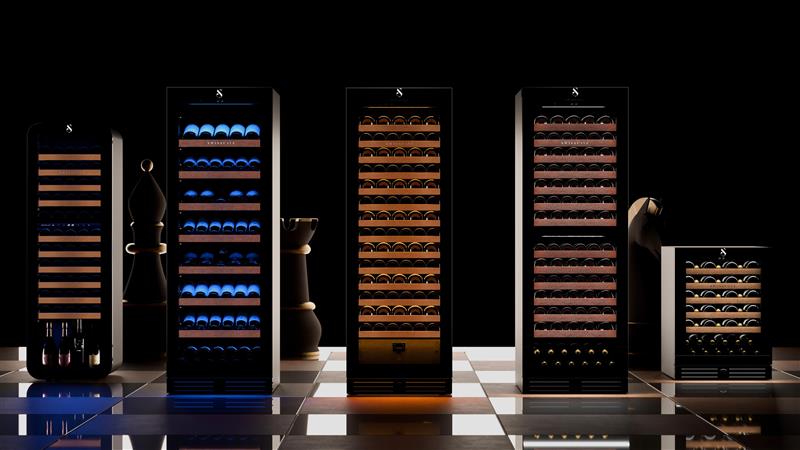
The chessboard is more than a metaphor. It describes a way of thinking.
Every move has consequences.
Not every piece is meant to dominate.
Some hold space.
Some create balance.
Some shape the game without drawing attention to themselves.
Advantage is rarely built through tempo alone. It is built through position.
In business, as in chess, impatience often looks like ambition — until the structure weakens. Strong positioning is different. It does not chase every move. It understands sequence, timing and restraint.
Consistency as differentiation
The faster a market moves, the more valuable consistency becomes.
Not as resistance to change — but as a standard.
Consistency is not repetition for its own sake. It is coherence over time. It is what makes a product feel trustworthy, a brand feel clear and a company feel intentional.
In markets shaped by constant novelty, consistency itself becomes a differentiator.
Because quality does not reveal itself in a moment.
It reveals itself over time.
Longevity is earned
Fifteen years are not a slogan. They are not an aesthetic detail and not a marketing claim.
They are the result of decisions made over and over again:
to stay precise,
to stay selective,
to improve without losing direction,
and to build without shortcuts.
Longevity is never created by accident. It is earned through discipline.
And discipline rarely looks dramatic from the outside. Often, it appears as restraint. As patience. As the ability to maintain standards while others accelerate without structure.
What time decides
Markets can reward momentum in the short term. Time does not.
Time rewards what endures.
What remains clear under pressure.
What keeps its shape while conditions change.
That is why time is not a promise.
It is a filter.
It decides what remains relevant when the noise fades.
It decides which products keep their meaning.
It decides which brands were built for attention — and which were built to last.
Conclusion
Time decides.
Not the next move —
but the game you are willing to play.













Comments